Disclaimer: While we reference traditional, spiritual, and historical beliefs surrounding Aqeeq, this guide is for informational purposes. Gemstone testing should be performed by a certified gemologist for definitive scientific authentication.
A Trusted Guide for Stone Authenticity, Testing & Expert Insights
Have you ever held an Aqeeq stone and wondered, “Is this the Real Aqeeq (Agate) that has been cherished for centuries, or just a piece of dyed glass?”
You are not alone. Aqeeq, known globally as a variety of chalcedony or agate, holds immense spiritual and cultural significance, especially in the Middle East and South Asia. This high demand, unfortunately, leads to a flooded market where distinguishing genuine quality from cheap imitations—glass, plastic, or heavily dyed low-grade agate—is a genuine challenge.
Aqeeq has been admired for centuries—but with the rise of dyed, heated, and synthetic stones in the market, identifying a Real Agate has become more challenging than ever. Whether you wear Aqeeq for spiritual energy, Islamic significance, or simply its timeless beauty, knowing how to verify Authentic Aqeeq is crucial.
Unfortunately, many sellers mix dyed agates, glass imitations, and synthetic stones with genuine ones—making it hard for buyers to make the right choice. This guide will help you cut through the noise with practical tests, expert-level tips, and real-world insights from gemstone dealers and collectors.
Let’s explore how to confidently identify a Genuine Aqeeq, avoid fakes, and choose the right stone for long-term value.
🟧 1. What Makes a Real Aqeeq Unique?
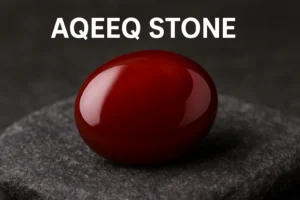
A Real Aqeeq (natural agate) is a form of chalcedony, a microcrystalline variety of quartz known for its layered patterns and strong durability. What makes Authentic Aqeeq special is its:
- Natural banding (layers)
- Subtle color gradients
- Earth-grown inclusions
- Cool touch and consistent density
- High durability compared to imitations
Unlike glass or synthetic stones, Genuine Aqeeq forms slowly under natural geological processes—creating unique patterns that cannot be perfectly replicated.
🌟 Why This Matters
Understanding these natural characteristics makes it easier to spot fakes using simple visual and physical checks covered in the next sections.
🟧 2. Natural vs Fake Aqeeq: Key Differences
Here is an easy comparison table to help you quickly identify whether your stone is Real Agate or artificially produced.
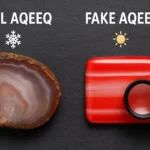
🔍 Comparison Table: Real Aqeeq vs Fake Aqeeq
| Feature | Real Aqeeq | Fake / Dyed / Glass |
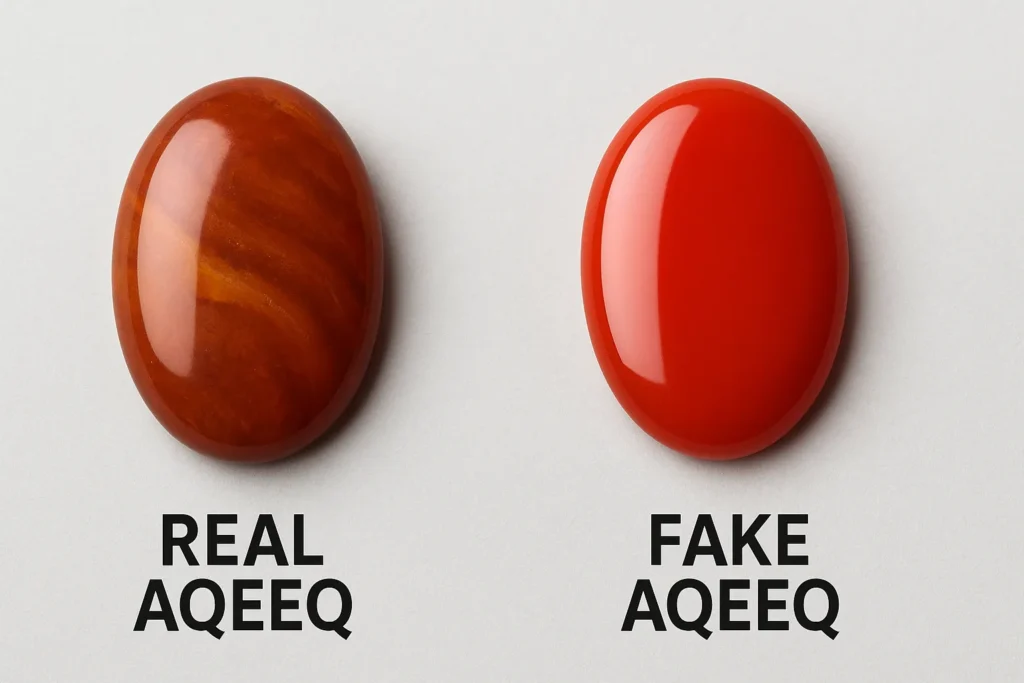
| Color | Natural, earthy, smooth transitions | Very bright, overly vibrant, unnatural |
| Banding | Wavy, irregular, naturally layered | Perfectly straight or blurry bands |
| Temperature | Feels cool even after holding | Warms quickly in hand |
| Weight | Medium-heavy (dense quartz) | Lighter (especially glass) |
| Texture | Smooth but not glossy like glass | Too shiny or too smooth |
| Transparency | Semi-translucent with cloudy areas | Completely transparent or oddly opaque |
| Price | Reasonable but not too cheap | Very cheap (warning sign) |
🟧 3. Expert Tests to Identify Authentic Aqeeq
The following 7 tests are widely used by gem experts, dealers, and collectors. All are safe and beginner-friendly.
🔍 The 7 Crucial Tests to Identify Real Aqeeq
The best way to determine Aqeeq authenticity is to use a combination of visual inspection and simple physical tests. Never rely on just one factor.
1. The Color and Pattern Test: Natural vs. Artificial (Visual)
This is the first and most accessible test.
Real Agate Characteristics:
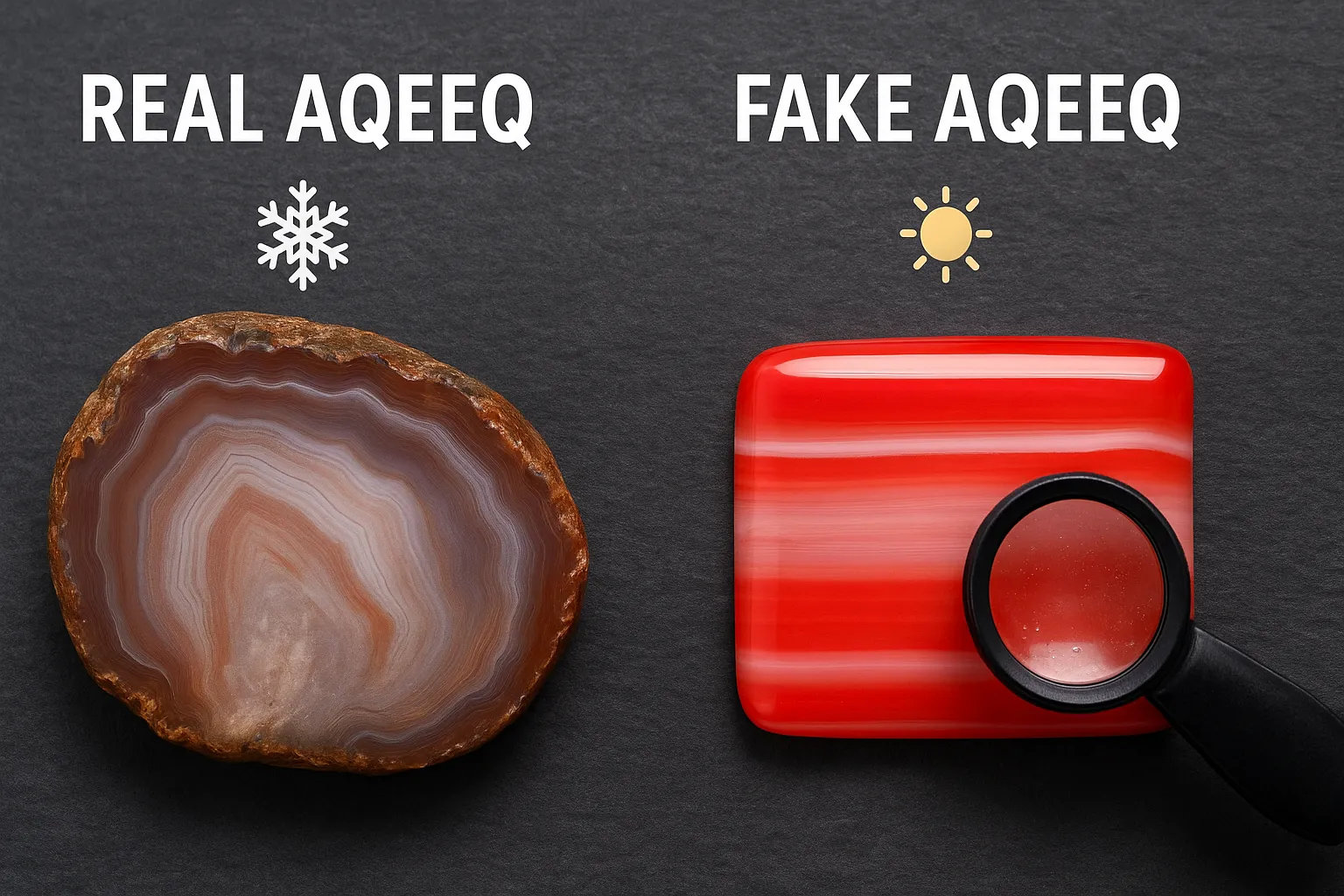
- Color Saturation: Genuine Aqeeq will display rich, deep, and often earthy colors (reds, browns, oranges, deep blacks). Crucially, the color saturation is usually uneven. You should see subtle shifts, inclusions, and areas of greater and lesser intensity.
- Banding: The distinctive bands (layers) are natural, flowing, and often irregular. They can look like waves, fortification walls, or moss (Moss Aqeeq).
- Unique Flaws: Genuine Aqeeq often contains tiny, natural imperfections, such as needle-like veins or small clouds of mineral inclusions, which add to its unique character.
Fake or Dyed Stone Warning Signs:
- Neon Colors: If the stone is bright blue, neon green, or vibrant purple, it is almost certainly dyed. While some agate is naturally blue, the most common Aqeeq varieties (like Red and Black) have earthy tones.
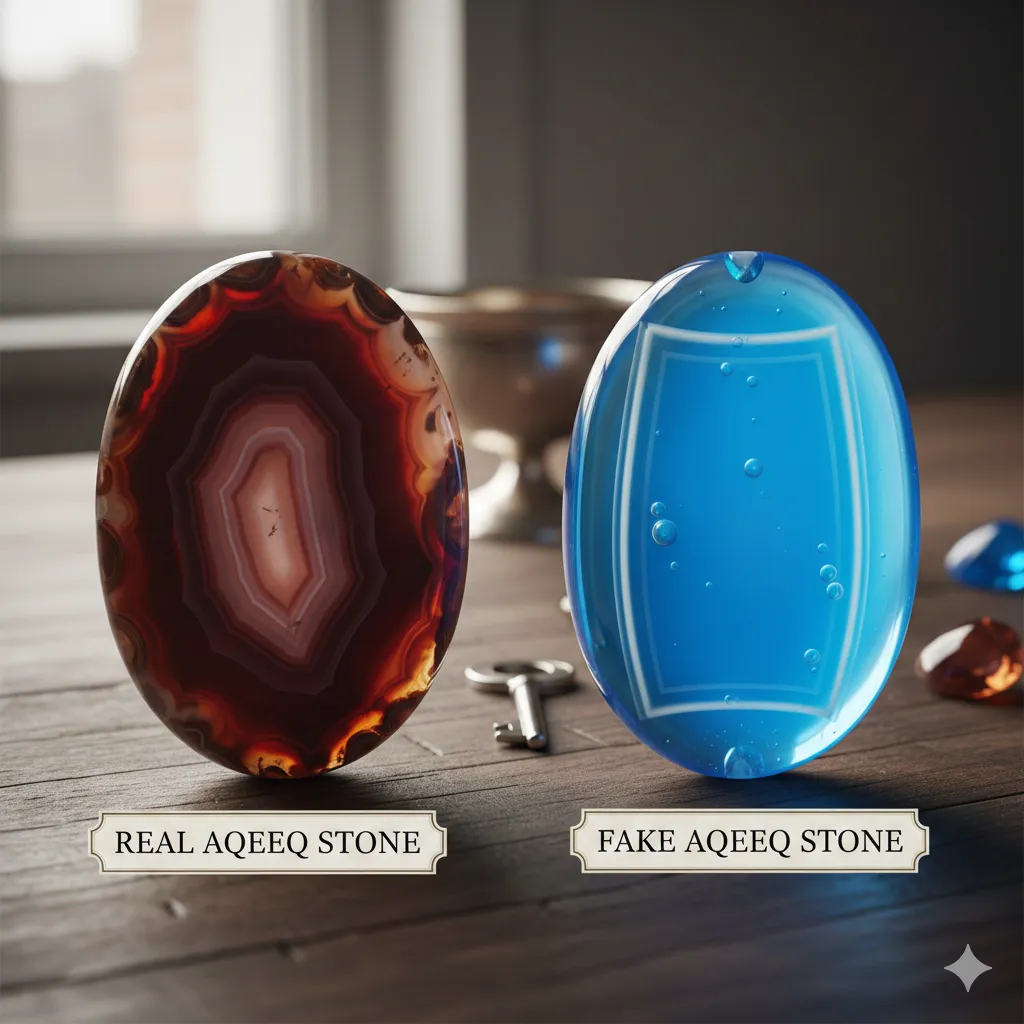
- “Too Perfect” Patterns: If the bands are overly crisp, identical, or look like they were drawn with a pen, they are artificial, often screen-printed or carved into a low-quality base.
- Dye Pooling: Look closely at any cracks or fissures (you may need a jeweler’s loupe). If you see a concentration or bleeding of color along these lines, the stone has been artificially dyed.
Dilkash Insight: When observing a natural red Aqeeq, like the highly prized Yemeni type, look for dense, tiny red spots or a slight smoky quality within the red stripes, rather than a uniform, flat color.
2. The Hardness Test: Scratch Resistance (Physical)
Aqeeq has a Mohs hardness of 6.5 to 7, placing it higher than most metals and ordinary glass. This is one of the most reliable ways to confirm stone authenticity.
The Test:
- Find a discreet spot on the underside of the stone.
- Attempt to scratch it lightly with a common steel object, such as a key, a knife tip, or a steel file.
- Result: Authentic Aqeeq should resist the scratch; it should not chip or mark under light pressure. If a mark is left, it is usually residue from the metal, not a scratch on the stone. If the stone is easily scratched or chipped, it is likely glass, calcite, or low-quality resin.
- (Optional but highly effective): An identify Aqeeq test can also involve using the stone to scratch a piece of standard glass. A real Agate should be able to leave a visible scratch on the glass surface.
3. The Temperature Test: The Cold Signature (Physical/Sensory)
Quartz, being a mineral, is an efficient thermal insulator compared to plastics or glass.
The Test:
- Hold the stone in your hand at room temperature for about 10–15 seconds.
- Result: Real Aqeeq will feel noticeably cool to the touch when you first pick it up and will take a longer time to warm up to your body temperature. Imitations made of plastic, resin, or even glass will warm up very quickly, sometimes within just a few seconds. This lasting coolness is a classic indicator of a genuine mineral.
4. The Translucency and Light Test (Visual/Optical)
Most quality Real Aqeeq (agate) is semi-translucent, meaning light can pass through it, but you cannot see clearly through it like glass.
The Test:
- Hold the stone up to a powerful light source, like your phone’s flashlight.
- Result: A Genuine Aqeeq should allow light to pass through, especially at the thinner edges, and the light should reveal its internal, layered patterns. The light transmission will look milky or soft, not perfectly clear or flat.
- Warning Sign: If the stone is completely opaque (zero light passes through) or, conversely, if it is perfectly transparent like a piece of manufactured glass, be suspicious.
5. The Weight Test: Density Matters (Physical/Sensory)
This test relies on the stone’s specific gravity. Quartz is significantly denser than its common imitations.
The Test:
- Compare the Aqeeq stone to a piece of glass or plastic of a similar size.
- Result: An Authentic Aqeeq will feel heavier and more substantial in your hand. Fake stones, especially those made of resin or low-density plastic, will feel disproportionately light.
6. The Magnification Test: Internal Clues (Visual/Detailed)
A 10x jeweler’s loupe or a strong magnifying glass is your best friend for this test.
What to Look For:
- Natural Inclusions: Look for organic streaks, pinpoint bubbles, or mineral veining that look naturally “grown” into the stone.
- Internal Bubbles: Fake Agate made from glass or resin may contain tiny, circular gas bubbles or swirl marks (like those seen in cheap glass) from the manufacturing process. The presence of spherical air bubbles is a near-certain sign of an artificial material.
- Cut and Polish: Genuine stones will have smooth, well-polished cuts, but the edges might show minor natural irregularities. Overly perfect, sharp, or brittle edges can sometimes point to a synthetic material.
7. The Heat Test (Cautionary Approach) (Physical/Chemical)
This is a more aggressive test and should only be performed on a small, unnoticeable area of the stone, or avoided entirely if you are unsure.
The Test (Use Extreme Caution):
- Gently apply the flame of a lighter to a tiny, obscure spot on the stone for a few seconds.
- Result: Genuine Aqeeq is non-combustible and is not easily affected by mild heat.
- Warning Sign: If the stone melts, warps, or emits a strong chemical or plastic smell, it is a synthetic, polymer-based imitation. If it turns a different color, it may be a heavily dyed stone.
🟧 4. Visual Guide: Patterns, Colors & Textures
Each type of Authentic Aqeeq shows specific natural characteristics.
Natural Color Indicators
Real Aqeeq colors are earthy, such as:
- Brown
- Red
- Orange
- Black
- White
- Grey
- Green (rare)
If the stone appears overly neon, bright, or artificial-looking, it is likely dyed.
Natural Banding Indicators
Real Aqeeq bands:
- Are uneven
- Look free-flowing
- Appear like natural waves
- Do NOT follow a perfect pattern
- Are darker near the edges
Fake stones often show:
- Identical, repeated patterns
- Symmetrical rings
- Digital-looking bands
🟧 5. Heat, Scratch & Light Tests (Safe Methods Only)
Below is a simple table summarizing the safest and most reliable authenticity checks.
| Test Name | Result in Real Aqeeq | Result in Fake Stone |
| Heat Test | Stays cool | Warms quickly |
| Light Test | Clear banding, natural glow | Flat color, bubbles |
| Scratch Test | No visible scratch | Easily scratches |
| Water Immersion Test | Banding becomes clearer | No change |
| Finger Tap Test | Solid “thud” sound | High-pitched click (glass) |
🟧 6. How Jewelers Verify Aqeeq (Professional Methods)
Professional gemologists use more advanced tools such as:
🔹 Refractometer
Real Aqeeq shows a refractive index between 1.530–1.540.
🔹 Spectroscope
Authentic stones show natural absorption lines.
🔹 Polarizing Filter
Reveals natural crystal structure.
🔹 Microscopic Analysis
Shows inclusions, cracks, and mineral patterns that cannot be faked perfectly.
You can request a jeweler’s verification when buying expensive Aqeeq rings or large gemstones.
🟧 7. Common Market Scams & How to Avoid Them
Here are the most common fake Aqeeq scams circulating in South Asia and the Middle East:
❌ 1. Heat-Treated Agate Sold as Natural
These stones look very bright and uniform.
❌ 2. Dyed White Agate Sold as Red Aqeeq
A strong red color that rubs off when scratched or soaked is a clear warning.
❌ 3. Glass Sold as Sulemani
Glass is lighter, clearer, and lacks natural banding.
❌ 4. Plastic “Aqeeq” Beads
Extremely lightweight and warm instantly.
❌ 5. Synthetic Lab Agate
These mimic patterns but appear too perfect.
🛡️ How to Protect Yourself
- Buy from verified gemstone sellers
- Ask for a return policy
- Request authenticity videos or magnified images
- Avoid prices that seem too good to be true
For More About Aqeeq Stone: Click Here
🟧 8. Final Verdict: How to Be 100% Sure of a Real Aqeeq
A truly Authentic Aqeeq will always show:
✔ Natural banding
✔ Cool temperature
✔ Earth-like colors
✔ Semi-translucent glow
✔ Consistent density
And most importantly—it will never look perfect.
If you feel confused, remember:
👉 Real stones show natural imperfections
👉 Fake stones look too uniform
🟧 9. Your Confidence is the Final Test
Ultimately, the goal of learning to Identify Aqeeq is to empower your purchasing decisions. Knowing the difference between a natural miracle and a manufactured trinket allows you to connect with the centuries-old tradition of wearing this beloved stone.
Trust your research, trust the physical properties of the Earth, and most importantly, trust a reputable supplier.
At dilkashcollection.shop, we believe that the true power of a gemstone lies in its stone authenticity. That’s why we’ve compiled this definitive, hands-on guide. By this post, you’ll have the seven crucial, non-destructive tests you need to confidently identify genuine Aqeeq and ensure you are buying a stone worthy of its legacy.
If you found this guide helpful and want verified Real Aqeeq stones, explore our premium collection at DilkashCollection.shop.
We offer:
✔ 100% genuine stones
✔ Trusted sourcing
✔ High-quality rings & loose stones
✔ Fast delivery in Pakistan
Have questions? Drop a comment or message us—we’re here to help you choose the perfect stone with confidence!
🟧 10. FAQs About Aqeeq Authenticity
Q1: Is real Aqeeq expensive?
Not always. Natural Aqeeq is affordable, but rare colors (green, pure black, Yemeni) are higher-priced.
Q2: Does Aqeeq fade over time?
Real Aqeeq does not fade, but dyed stones lose color.
Q3: Are transparent Aqeeq stones real?
Aqeeq is usually semi-translucent. Fully transparent stones are likely glass or crystal.
Q4: Can I test my Aqeeq at home?
Yes—light test, temperature test, and magnification test are simple and reliable.
You May Also like: Agate (disambiguation)